 11
11
Marine diesel contamination is not always dramatic. It rarely announces itself with immediate engine failure. More often, it begins subtly: a slight hesitation under load, a clogged filter sooner than expected, a faint change in exhaust behavior.
For captains and yacht operators, recognizing the early signs of contaminated marine diesel can prevent mechanical damage, costly downtime, and disrupted itineraries.
Marine engines are engineered for precision. Fuel contamination introduces unpredictability. The earlier contamination is detected, the less operational and financial impact it creates.
This guide outlines the most common signs of contaminated marine diesel, what causes those symptoms, and what captains should do when warning signals appear.
Marine diesel systems are more vulnerable than many land-based systems for one simple reason: boats sit.
Periods of inactivity, fluctuating temperatures, and moisture exposure create ideal conditions for contamination to develop inside fuel tanks.
Contamination can lead to:
In offshore conditions, fuel-related failure is more than inconvenient. It can become a safety issue.
Prevention begins with awareness.
Understanding symptoms requires understanding causes. The primary contamination categories include:
Each presents slightly different warning signs.
One of the earliest and most common signs of contaminated marine diesel is unusually frequent fuel filter replacement.
If filters that typically last months begin clogging in weeks, contamination may be present.
Possible causes include:
When filters clog, engines may experience:
Repeated filter changes without identifying the root cause only treats the symptom.
Water is one of the most damaging contaminants in marine diesel systems.
Water can enter through:
Signs of water contamination include:
Water does not compress like fuel. When introduced into injectors, it can cause damage and inefficient combustion.
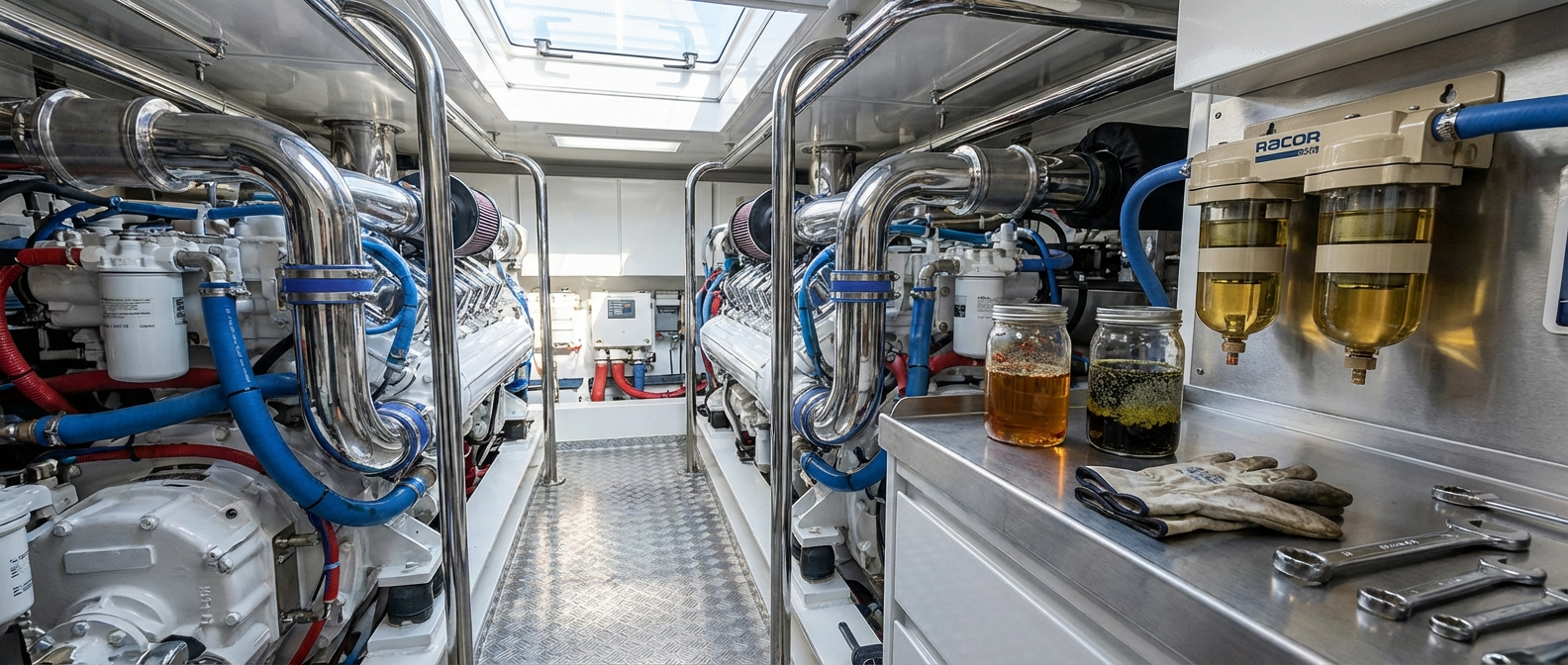
Routine inspection of fuel-water separators is critical.
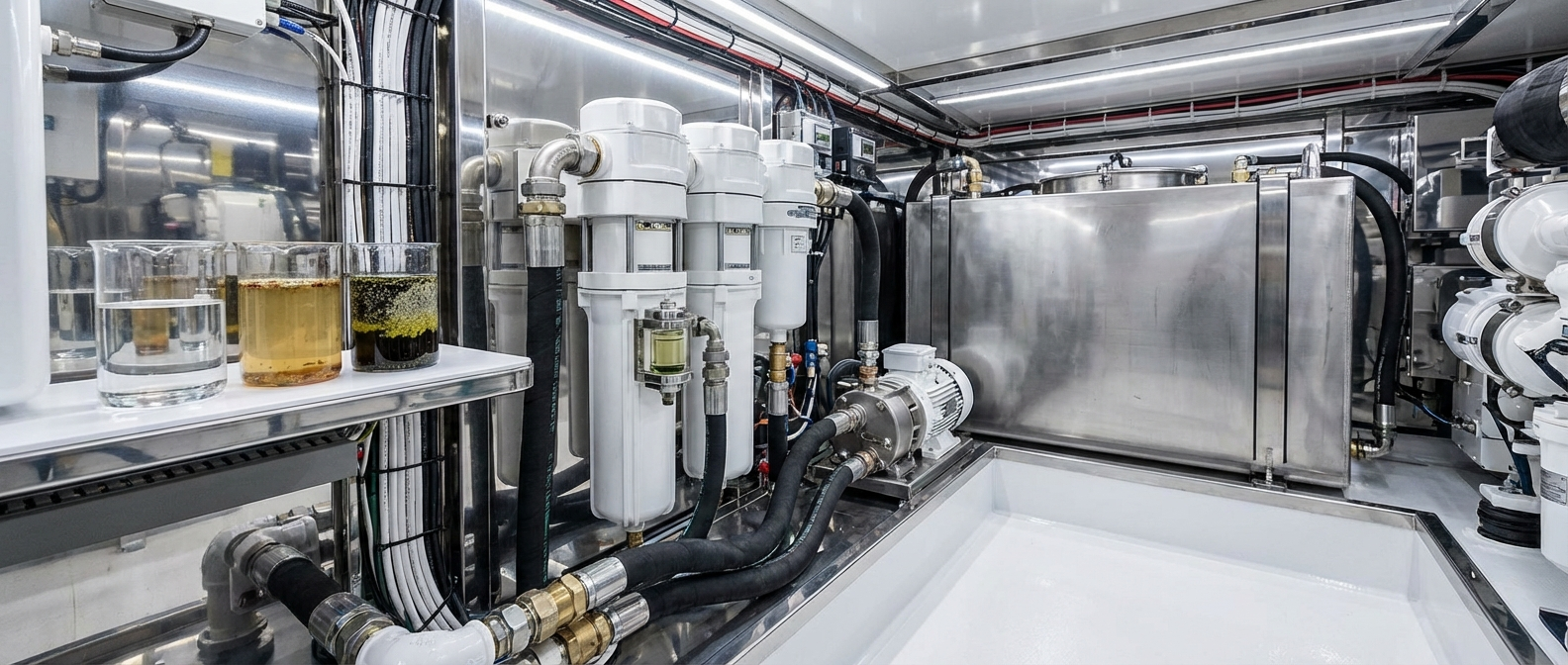
Healthy marine diesel typically appears clear and bright.
If fuel sampled from a tank appears:
contamination is likely present.
Microbial growth forms sludge-like deposits that accumulate at the bottom of tanks. When the vessel moves in rough seas, that sludge can stir and enter fuel lines.
Darkened fuel may also indicate oxidation from long-term storage.
Visual inspection remains one of the simplest diagnostic tools available to captains.
Contaminated fuel affects combustion quality.
Symptoms may include:
These marine diesel symptoms often correlate with clogged injectors or restricted fuel flow.
Fuel contamination disrupts the precise fuel-air mixture required for efficient combustion.
Performance degradation is frequently gradual at first, making early detection important.
Changes in exhaust behavior can signal fuel problems.
Black smoke may indicate incomplete combustion due to restricted fuel flow. White smoke can indicate water contamination or improper atomization.
Excessive smoke under normal load conditions warrants inspection of the fuel system.
While exhaust issues can stem from multiple causes, fuel contamination remains a common contributor
Water and microbial activity create corrosive conditions inside tanks and fuel lines.
Captains may observe:
Corrosion accelerates component wear and can introduce additional particulates into the fuel system.
Left untreated, contamination becomes self-reinforcing.
Fresh marine diesel has a distinct but stable odor.
Fuel that smells:
may be oxidized or biologically active.
Oxidation occurs when fuel sits unused for extended periods. Degraded fuel loses combustion efficiency and may leave deposits inside injectors and combustion chambers.
Odor changes are often overlooked but can provide early warning.
Marine fuel tanks accumulate contaminants at the bottom over time.
Because diesel floats on water, water settles below fuel. Microbial growth thrives at the fuel-water interface.
During calm operation, contaminants may remain undisturbed. However, heavy seas or long passages can agitate tank contents, pushing sludge into fuel lines.
Captains often first notice contamination after offshore runs when engines begin struggling mid-passage.
Routine tank inspection and periodic fuel polishing reduce this risk.
Many yachts sit for weeks or months between heavy use periods.
Long-term storage increases risk of:
Partially filled tanks increase air volume inside the tank, encouraging moisture formation.
Maintaining fuller tanks during storage can reduce condensation risk.
Fuel stabilizers may also support longer-term storage integrity, but they are not substitutes for inspection.
If symptoms appear, captains should take structured action:
Fuel polishing circulates fuel through filtration systems to remove water and particulates.
In severe cases, tanks may require manual cleaning.
Ignoring contamination rarely resolves the issue. It typically worsens.
Prevention reduces long-term cost and downtime.
Best practices include:
Fuel contamination rarely appears overnight. It develops gradually. Routine vigilance prevents escalation.
Fuel-related engine damage can result in:
Compared to these costs, proactive monitoring and maintenance represent minimal investment.
Contaminated marine diesel is not merely a mechanical nuisance. It is a controllable operational risk.
Captains who recognize the early warning signs protect both the vessel and the owner’s financial exposure.
Marine diesel is the lifeblood of propulsion. Its integrity determines engine reliability. Monitoring that integrity is part of professional seamanship.