 11
11
Marine diesel pricing is rarely just about the posted number at the dock. For yacht owners and captains managing serious fuel budgets, volume is one of the most powerful pricing variables in the equation.
The difference between purchasing 300 gallons and 3,000 gallons is not linear. It can significantly alter your per-gallon cost, supplier flexibility, and negotiation leverage.
In this guide, we break down how fuel volume impacts marine diesel pricing, why larger fills often unlock better rates, and how yacht owners can structure purchases to reduce long-term fuel spend.
Marine diesel pricing operates on a layered distribution model:
At each stage, margin is added. The larger the order, the more flexibility exists in that margin structure.
Fuel distributors source diesel at rack pricing from fuel terminals. From there, they factor in:
When a yacht purchases a small amount of fuel, the fixed delivery costs are spread across fewer gallons. When the volume increases, those same fixed costs are distributed across thousands of gallons, lowering the effective per-gallon cost.
Volume changes the math.
When yachts fuel in smaller increments, they typically fall into one of two categories:
In both cases, pricing is usually higher because:
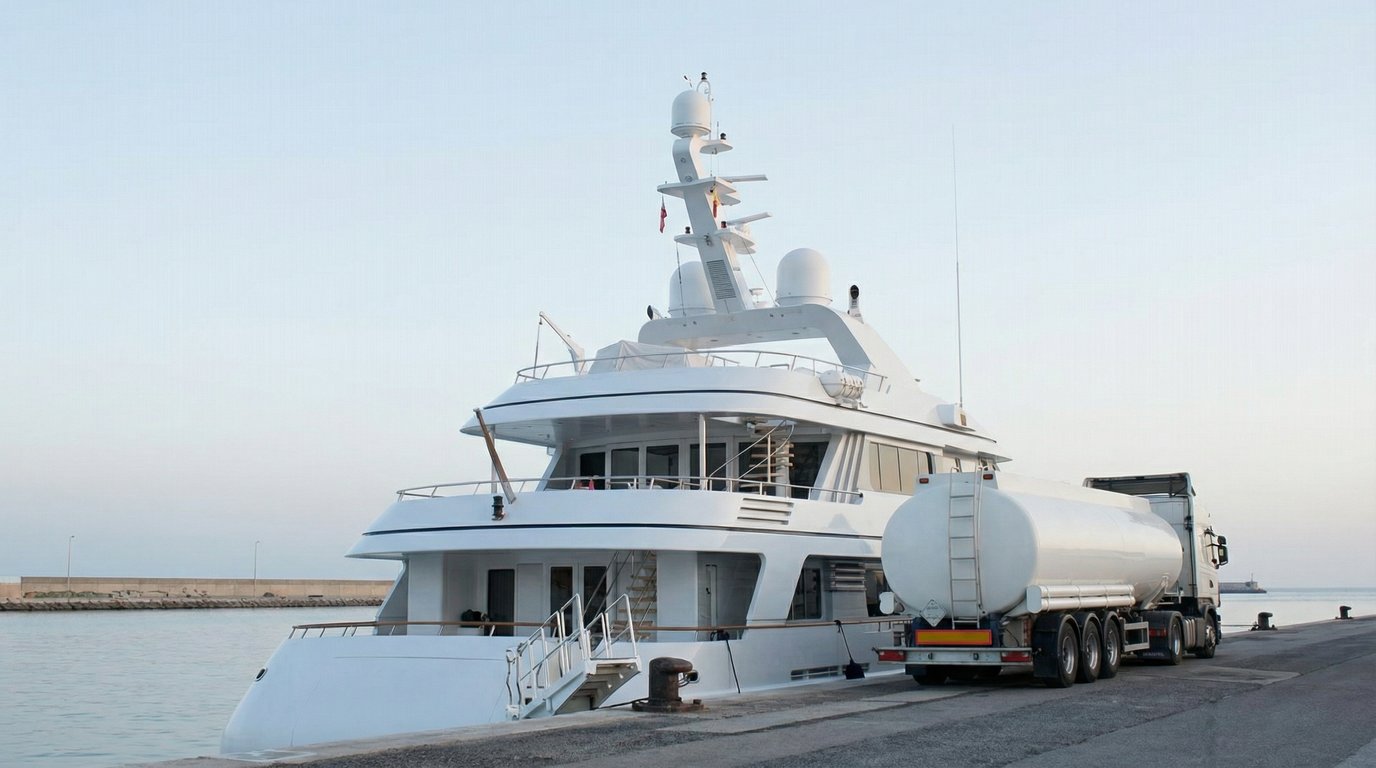
For example, delivering 500 gallons requires nearly the same operational effort as delivering 3,000 gallons. The truck rolls either way. The driver time is similar. The insurance and risk exposure are identical.
Because of this, smaller orders often absorb more per-gallon margin.
Once a yacht begins taking on 1,000 to 2,500 gallons at a time, pricing structures often shift.
At this level:
This is where captains start moving away from purely retail pricing and into structured delivery relationships.
Even a reduction of $0.40 to $0.75 per gallon becomes meaningful at scale.
At 2,000 gallons, a $0.50 difference equals $1,000 saved in a single fueling.
For superyachts and fleet operators taking on 3,000 to 10,000+ gallons per fill, volume leverage becomes significant.
Large volume buyers may gain access to:
At this level, the supplier views the yacht as a recurring commercial account rather than a transactional retail stop.
Volume creates predictability. Predictability reduces risk for the distributor. Reduced risk improves pricing flexibility.
To understand volume-based pricing, you need to understand rack pricing. Rack price is the wholesale price at the terminal before distribution markup. Distributors purchase fuel at rack and add margin for delivery and operations.
When volume increases:
Large fills can reduce the effective spread between rack and delivered price.
This is where meaningful savings occur.
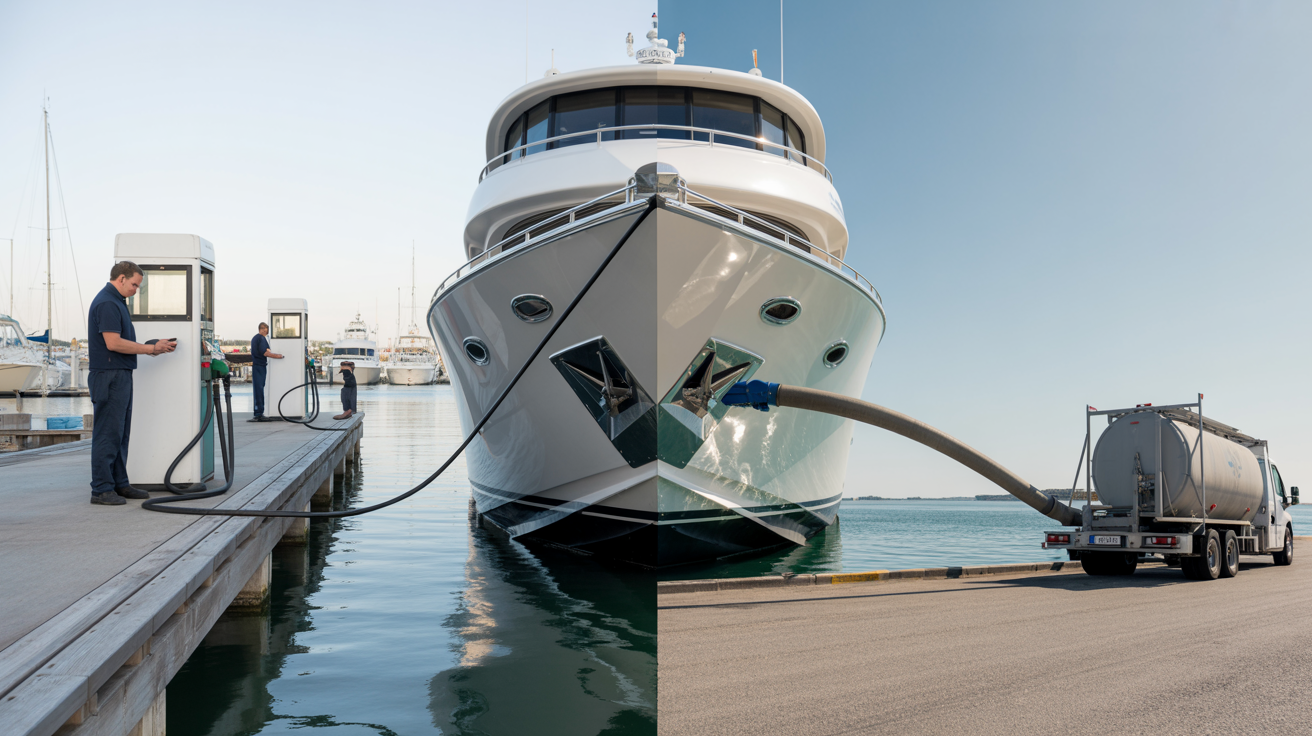
Marina fuel docks often post flat pricing per gallon.
While some marinas offer minor discounts for very large fills, the structure is typically less flexible because:
Truck delivery, by contrast, is more adaptable to negotiation.
For volume-driven yachts, dockside convenience often comes at a measurable premium.
Fueling strategy should not be evaluated per fill alone. It should be assessed annually.
Consider two yachts:
Yacht A:
Yacht B:
Even a $0.40 per gallon difference annually results in:
Volume amplifies every pricing adjustment.
For yachts operating year-round in high-demand markets like South Florida, volume planning becomes a critical budgeting tool.
One strategy captains use to optimize marine diesel pricing is consolidating fuel orders.
Instead of:
They aim for:
Benefits include:
The key is aligning fueling strategy with operational planning.
Yacht management companies overseeing multiple vessels gain even greater leverage.
When volume extends across a fleet:
Volume aggregated across multiple yachts can transform pricing power entirely.
Not automatically. Factors that still influence final pricing include:
However, in stable conditions, larger volume consistently improves negotiating position.
The key difference is leverage. Smaller orders accept pricing. Larger orders influence it.
To maximize volume-based pricing advantages:
Fuel is one of the largest controllable operating expenses in yachting. Volume strategy is not about cutting corners. It is about purchasing intelligently within the distribution structure.
Marine diesel pricing is not fixed. It responds to leverage. The more volume you purchase, the more flexibility exists in distribution margin, transportation efficiency, and supplier negotiation.
Small fills prioritize convenience. Large fills unlock pricing structure. For yacht owners and captains serious about controlling fuel budgets, understanding how fuel volume impacts marine diesel pricing is a competitive advantage.
Fuel strategy is not just about when you buy. It is about how much you buy.