 11
11
Fuel is supposed to be the quiet workhorse of your yacht. You pump it in, your engines hum, and you move across the water like a floating boardroom or a private island on the move. But when fuel contamination creeps in, that hum turns into hesitation, clogged filters, injector issues, and sometimes a very expensive day.
If you operate a yacht in Florida or anywhere along the coast, understanding what causes fuel contamination is not optional. It is operational intelligence.
This guide breaks down the real causes of fuel contamination in yachts, how it develops inside marine fuel systems, and how to prevent it before it costs you time, money, and reputation.
Water is the number one cause of fuel contamination in yachts. Not bacteria. Not bad diesel. Water.
In humid environments like South Florida, condensation is relentless. When a yacht sits with half-full tanks, warm daytime air enters through the vent system. At night, temperatures drop, and moisture condenses on the inside of the tank walls, dripping into the fuel below.
Diesel and water do not mix. The water sinks to the bottom of the tank, creating a perfect breeding ground for microbial growth.
Even small amounts of water can trigger a chain reaction that affects the entire fuel system.
Many captains refer to it as “diesel algae.” Technically, it is microbial contamination, typically bacteria and fungi that live at the interface between water and diesel.
These microbes feed on hydrocarbons and reproduce rapidly in warm environments. Florida waters? A five-star resort for fuel microbes.
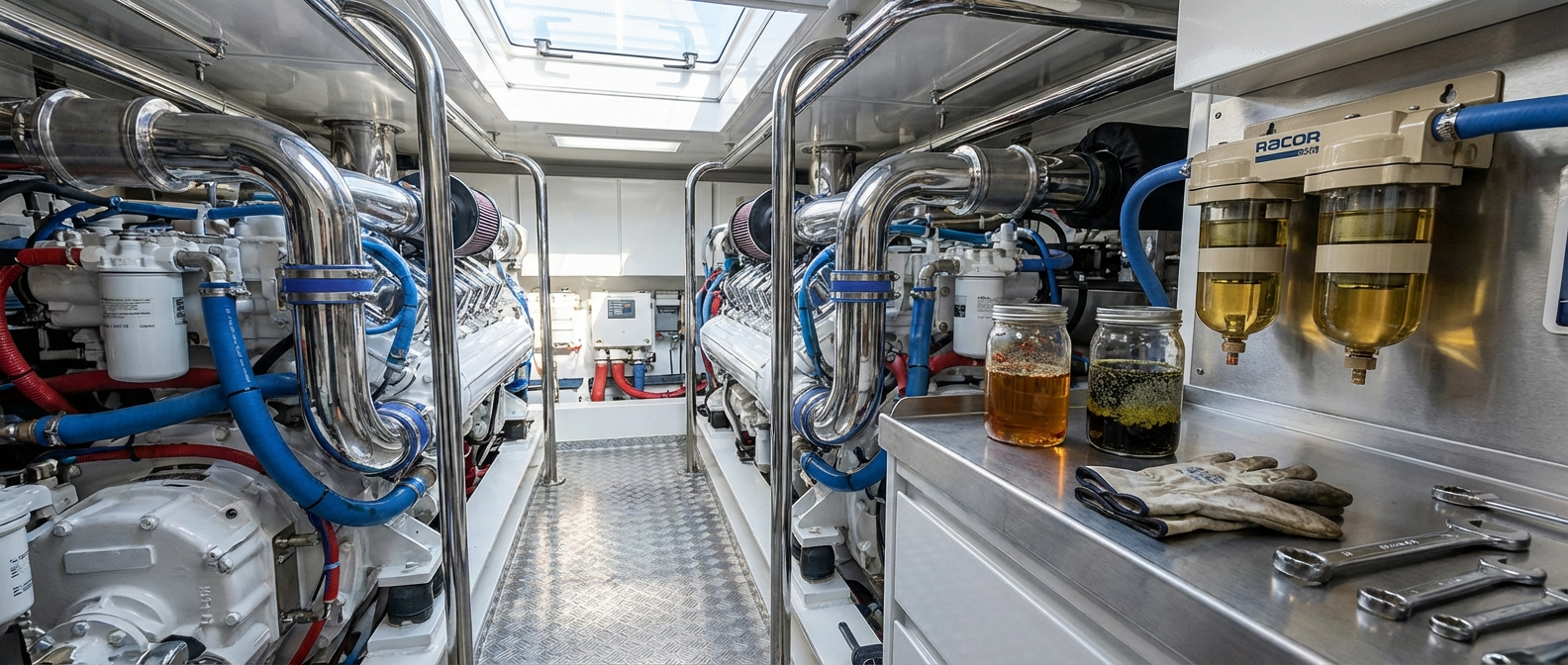
If you have ever changed a fuel filter and found it coated in dark slime, you have met the culprit.
Microbial growth does not start without water. Which brings us back to prevention: eliminate water, eliminate the ecosystem.
Over time, fuel tanks accumulate:
Older yachts, especially those with steel tanks, are particularly vulnerable to internal corrosion. Even aluminum tanks can accumulate sediment from years of use.
When a yacht moves through rough seas, this sediment gets stirred up, traveling through fuel lines and into filters.
Many fuel-related breakdowns happen not because fuel was “bad,” but because debris that had been sitting quietly for years suddenly became mobile.
Diesel does not last forever.
Modern ultra-low sulfur diesel (ULSD) has a shorter shelf life than older formulations. Over time, exposure to oxygen causes oxidation. The fuel darkens, thickens slightly, and forms gums and varnish-like deposits.
This is especially common in yachts that:
In high-end yacht operations, low turnover can ironically increase contamination risk.
Degraded fuel is not always visibly dirty, but it performs poorly and stresses engine components.
Not all contamination originates in your tank.
Sometimes it enters during fueling.
Even reputable facilities can experience contamination if their underground tanks have water intrusion or sediment buildup.
If you are sourcing marine diesel in high-traffic areas like Fort Lauderdale, high volume often means fresher fuel, but it does not eliminate infrastructure risk.
Captains and yacht managers should vet fuel suppliers carefully and prioritize distributors that:
Fuel quality control begins before it reaches your yacht.
Many marine fuel supplies now include biodiesel blends.
While compliant and widely used, biodiesel:
In older fuel systems, switching to biodiesel blends can dislodge years of buildup, creating temporary contamination spikes.
This is not necessarily a defect in the fuel itself. It is often the system reacting to change.
Yacht fuel tanks are not self-cleaning ecosystems.
Over time, even well-maintained vessels accumulate:
Without periodic inspection and cleaning, contamination compounds quietly until a system failure forces attention.
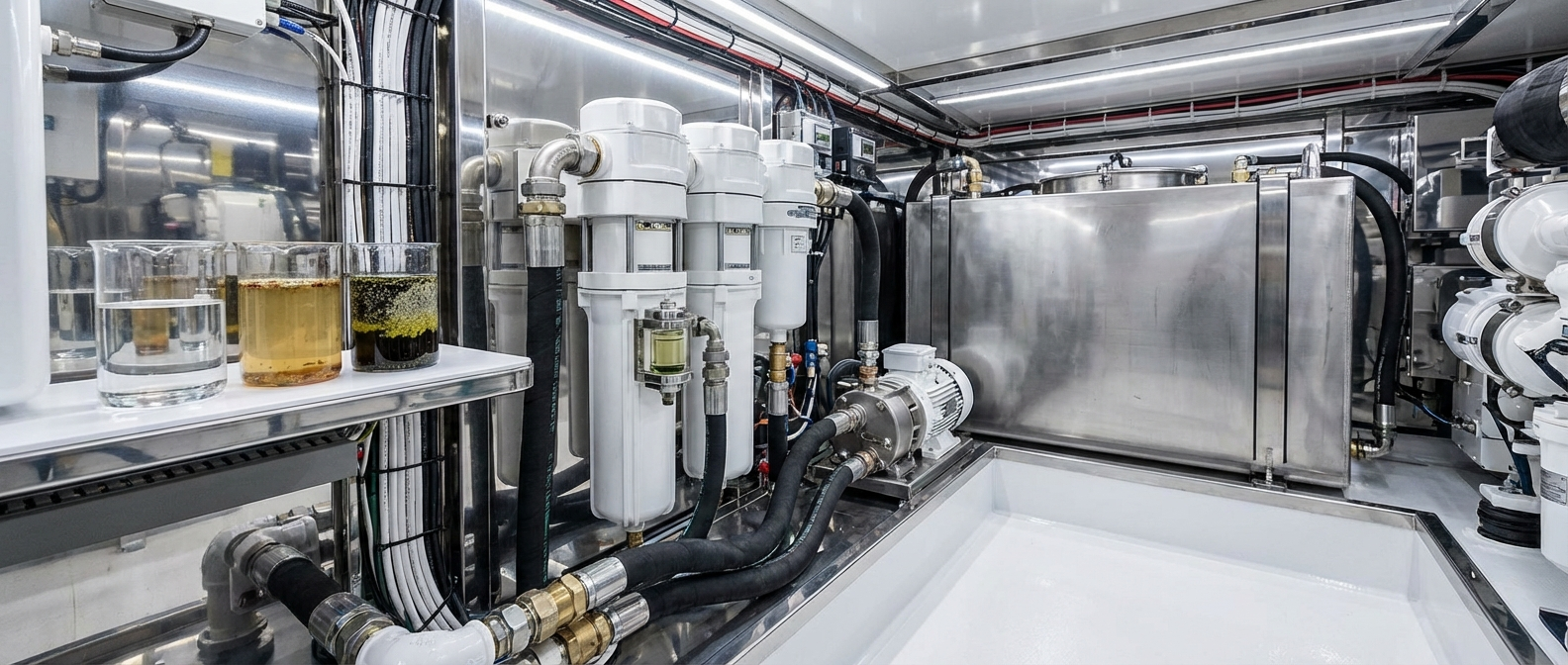
Fuel polishing systems circulate diesel through high-efficiency filters, removing water and particulate matter before they cause engine issues.
For yachts operating long distances or on tight charters, this is operational insurance.
Marine environments are volatile.
Yachts in coastal climates face more contamination risk than inland diesel storage systems.
Florida, the Caribbean, and Gulf Coast operations experience year-round exposure to the exact conditions that encourage fuel degradation.
Environmental reality must inform your maintenance schedule.
If a yacht sits for extended periods, untreated diesel begins to degrade. Stabilizers and biocides can extend fuel life and inhibit microbial growth.
Without treatment:
Luxury vessels that operate seasonally are particularly vulnerable.
Ironically, the less you use the yacht, the more attention the fuel system requires.
Fuel contamination rarely starts as a dramatic event.
It starts as:
Then over time:
Water settles.
Microbes grow.
Sludge forms.
Filters clog.
Engines strain.
And suddenly a routine trip becomes a mechanical investigation.
The danger is not just repair cost. It is downtime. Reputation. Delays during charters or owner trips.
For commercial yacht operations, reliability is currency.
Prevention is structured discipline, not guesswork.
Reducing air space minimizes condensation.
Deck fills, gaskets, and vent systems must remain watertight.
Fresh fuel reduces degradation risk.
Water separators and primary filters should be monitored closely.
Especially for yachts that sit idle.
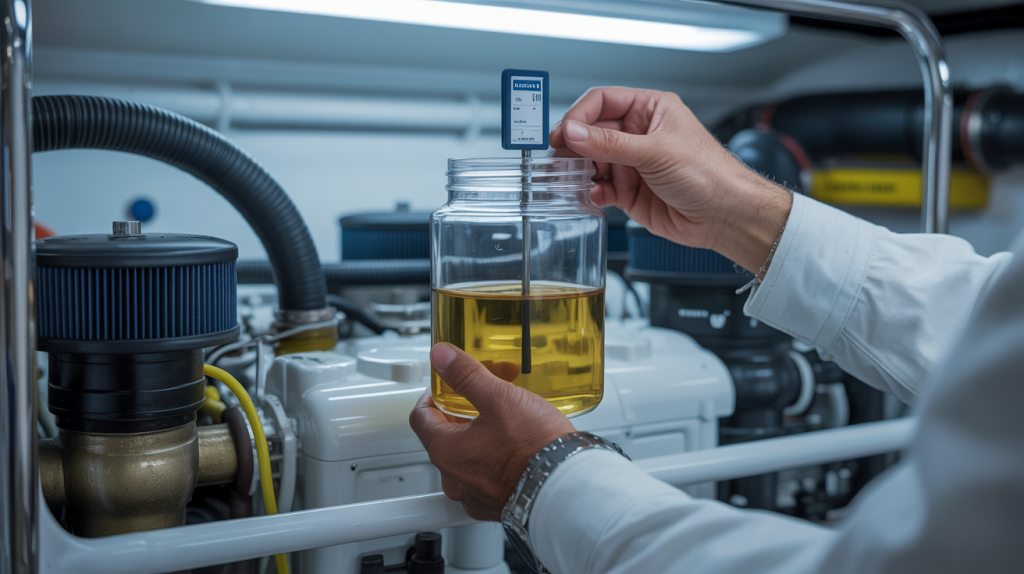
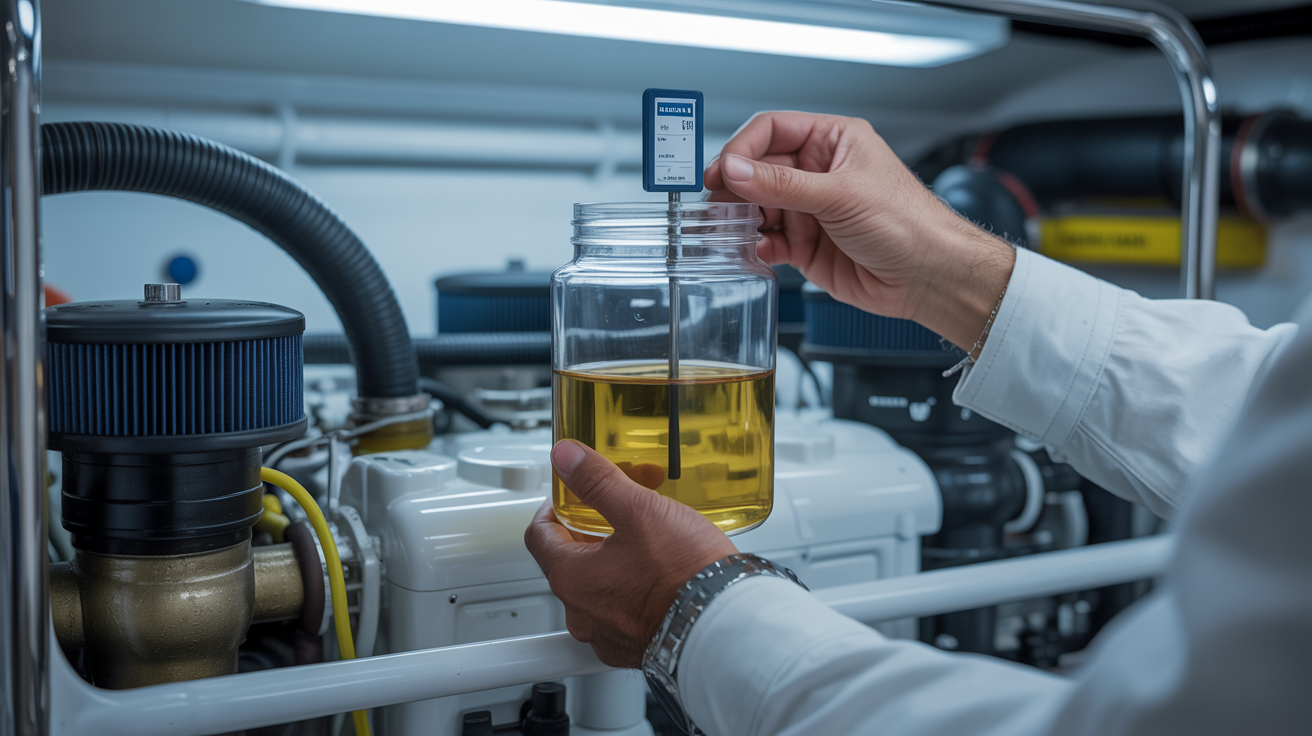
Fuel testing kits can detect water and microbial presence before visible symptoms occur.
On a yacht, fuel is not just a consumable. It is infrastructure.
Contamination does not happen overnight. It develops gradually, quietly, inside steel or aluminum tanks that rarely get attention until something goes wrong.
The most common causes of fuel contamination in yachts are:
Each is preventable with proper systems and oversight.
If you are managing fuel procurement for a yacht or fleet, understanding contamination risk is part of protecting both engines and budgets.
Because on the water, reliability is not a luxury. It is the baseline.
Looking to reduce fuel risk and control sourcing costs?
Work with a marine diesel supplier that prioritizes clean fuel, documented quality, and dependable delivery. Clean fuel is not just about performance. It is about certainty.