 11
11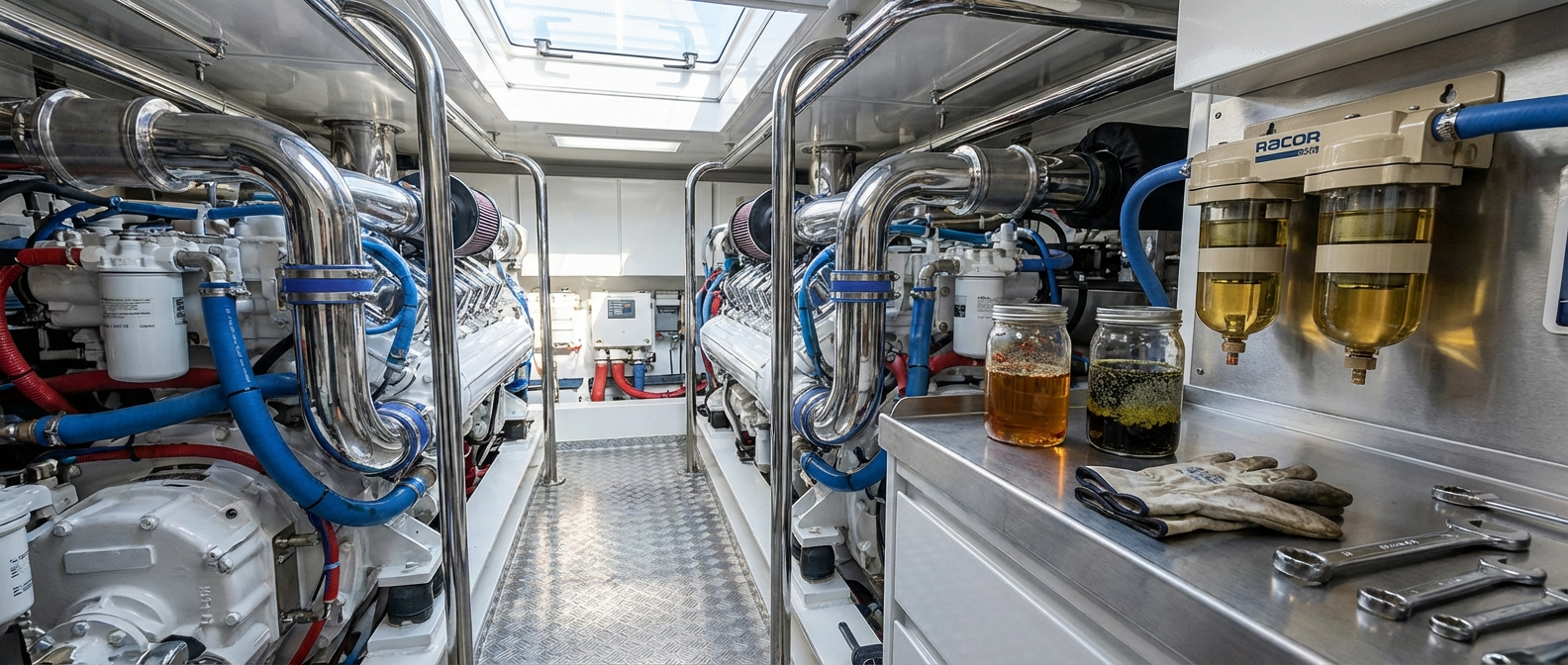
Fuel contamination is often discussed as a maintenance issue. In reality, it is a financial risk event.
For yacht owners, captains, and management companies, contaminated marine diesel can quietly escalate from a minor filtration problem into injector damage, charter disruption, emergency service calls, and five-figure repair invoices.
Marine diesel systems are designed for precision. When fuel integrity is compromised, the cost multiplies across mechanical, operational, and reputational dimensions.
Understanding the true cost of fuel contamination requires looking beyond clogged filters and examining the broader economic impact on yacht operations.
Fuel contamination rarely begins as catastrophic engine failure. It typically unfolds in stages:
At the early stage, the issue may appear minor. By the time engine alarms trigger or performance drops noticeably, damage may already be occurring internally.
Small oversight becomes compounded expense.
One of the most immediate financial impacts of contaminated marine diesel is mechanical repair.
Common contamination-related repairs include:
Modern marine diesel injectors are precision components. Water or sludge entering the injection system can lead to pitting, clogging, or improper spray patterns.
Injector replacement on larger engines can cost thousands per cylinder. Multiply that across multiple engines, and the numbers climb quickly.
Fuel pumps, particularly high-pressure systems in modern engines, are equally sensitive. Contamination-induced wear shortens lifespan significantly. The mechanical invoice is often the most visible cost, but it is rarely the only one.
Downtime often costs more than repairs.
For private yacht owners, downtime means:
For charter vessels, downtime translates directly into revenue loss. A canceled charter week on a high-end vessel can represent tens of thousands of dollars in forfeited income. In peak season, that loss compounds.
Even a few days waiting for parts or fuel system cleaning can disrupt tightly scheduled itineraries.
Fuel contamination is rarely convenient. It tends to appear during heavy use or offshore passages, when engine demand is highest.
When contamination causes failure away from home port, emergency response costs increase significantly.
Emergency expenses may include:
Emergency labor rates often exceed standard shop rates. Urgent shipping of injectors or pumps can further inflate cost.
What might have been a scheduled maintenance event becomes a premium-priced crisis response.
If contamination is detected before mechanical damage occurs, tank cleaning and fuel polishing may be required.
Costs vary based on:
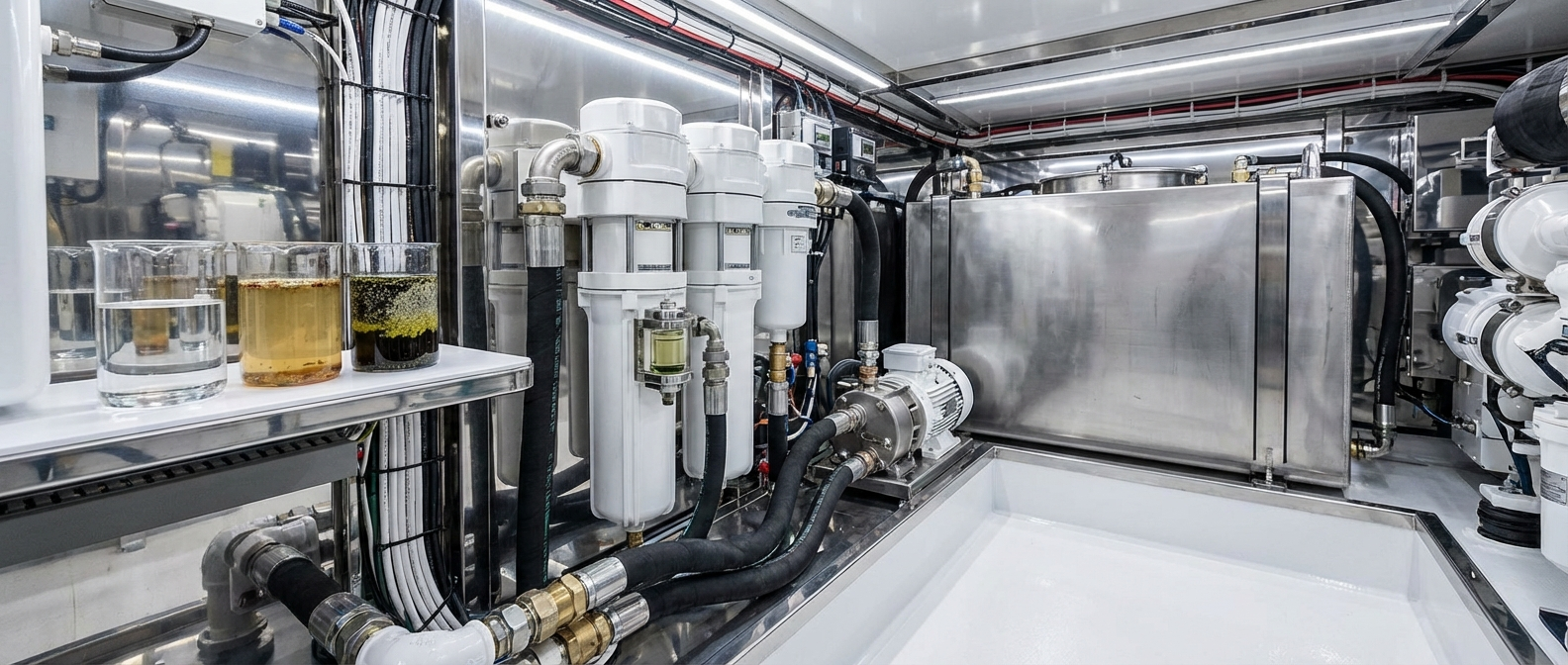
Fuel polishing involves circulating fuel through specialized filtration systems to remove water and particulates. In severe cases, manual tank cleaning may be necessary.
While polishing is more affordable than injector replacement, it still represents unplanned operational expense. Preventative polishing is typically far less expensive than corrective cleaning after engine symptoms appear.
Contaminated marine diesel does not always cause immediate failure. Sometimes it accelerates long-term wear subtly.
Water reduces lubrication properties in fuel. Poor combustion creates carbon buildup. Sediment increases abrasion inside pumps and injectors. These effects may not trigger alarms instantly. Instead, they shorten engine lifespan incrementally.
Over years of operation, that wear translates into:
Contamination cost is sometimes deferred, not avoided.
In certain cases, fuel contamination can create insurance complexity.
If contamination results from:
coverage disputes may arise.
Additionally, if a vessel loses propulsion due to contaminated fuel and causes damage or grounding, liability exposure increases. While severe scenarios are rare, they illustrate the broader risk landscape surrounding fuel integrity. Fuel quality is not merely a mechanical concern. It intersects with safety and compliance.
For charter yachts, reliability is reputation.
A mechanical failure attributed to fuel contamination during a guest voyage can result in:
In competitive charter markets, perception matters.
Preventable fuel-related downtime is particularly costly because it signals operational oversight rather than unpredictable mechanical failure.
Reliability builds brand equity. Contamination undermines it.
Consider two scenarios:
Scenario A: Preventative strategy
Annual cost: predictable and manageable.
Scenario B: Reactive response
Total cost: potentially five to ten times higher.
Prevention expenses are visible. Reaction costs are disruptive and often significantly larger.
From a financial standpoint, contamination prevention is an investment in operational stability.
Certain operational patterns increase contamination risk and therefore financial exposure:
Yachts operating across multiple regions may also encounter varying fuel handling standards.
Identifying risk patterns allows operators to allocate preventive attention appropriately.
Captains and yacht managers seeking to reduce financial exposure can implement structured safeguards:
Documentation of these practices also supports insurance positioning and resale value.
Engines maintained with disciplined fuel management are attractive in resale evaluations.
Fuel contamination is not an abstract risk. It carries measurable economic impact.
The financial consequences include:
When viewed collectively, the potential cost of contamination far exceeds the expense of routine monitoring and preventive maintenance. Marine diesel is the lifeblood of propulsion. Its integrity determines not only mechanical performance but financial performance.
Professional yacht operation requires treating fuel quality as a risk management priority rather than an afterthought. The cost of contamination is rarely confined to a single invoice. It ripples outward through operations, scheduling, revenue, and long-term asset value.
In that context, prevention is not optional. It is financially rational.